
Plan an Omaha stay around the days you want
Connect your room, arrival and time in the city before choosing an Omaha base.

A useful Omaha stay starts with a small map of your own plans. Put the place you need to be, the place you most want to explore and your arrival point on it before looking closely at rooms. Those three markers tell you more than a broad area label. A downtown weekend built around galleries and dinner asks something different of a base from a visit centred on family, a meeting or an early departure. Let the pattern of the trip give the accommodation search its direction.
Start with the time you actually have in Omaha. An arrival evening followed by one full day is different from three days with flexible mornings. Write down the fixed commitments, then leave the remaining spaces open long enough to understand them. This prevents a common planning problem: choosing a place for an ambitious list of outings that would never fit the visit. Your room should support the trip you are likely to take, including rest and ordinary meals, rather than a collection of possibilities saved in separate tabs.
Sketch two possible versions of the visit before choosing between bases. One might begin with a quiet arrival evening and put the museum on the following day; another might use the first afternoon for the Old Market and keep the next morning open. Compare what each version asks of the room and the journeys around it. This small exercise can reveal that a preferred location depends on a schedule you do not actually want. Choose the sequence first when that is the real decision, then let the accommodation support it.
Choose the important journey first
Identify the journey you will repeat or find hardest to rearrange. For some visitors it is the route to an event entrance; for others it is getting back to the room after dinner or reaching a relative’s home each morning. Mark the exact address rather than a district centre. If two people have different commitments, compare both before choosing the base. A location that is convenient for the person making the booking may be awkward for the person who will spend more time travelling from it.
Describe that important journey in practical terms. Will you leave with a suitcase, return after an evening activity, drive every day or prefer to keep the car parked? Will everybody travel together? These details change the meaning of a location. A short-looking line on a map does not show the route through an entrance, a parking arrangement or the effort of carrying bags. Use the map to identify questions, then check the actual route and relevant property details. You are testing how the stay will work, rather than merely how close two pins appear.
Give each part of downtown a name
Visit Omaha describes the Old Market as a historic downtown district with restaurants, shops and galleries. That makes it a specific place to research when those interests matter to your visit. It does not make every property described as downtown equally convenient for your plans. Put the particular restaurant, gallery or meeting point you care about on the map. Our Old Market and downtown guide develops this approach without assuming that you want to spend the whole visit in one district.
The same precision helps with a riverfront day. The RiverFront brings together Gene Leahy Mall, Heartland of America Park and Lewis and Clark Landing. Treat the park or feature you intend to visit as the destination, rather than using a single riverfront pin for every outing. A base chosen for one end of an afternoon may involve a different return arrangement from a base chosen for another. Select the part that interests you first; add more only when the route and the group’s energy make sense.
Keep arrival separate from the sightseeing plan
If you are flying, plan the connection from Eppley Airfield to the property as its own task. The airport’s Find Your Way at OMA resource provides current guidance during terminal construction, including maps and directions for different transport choices. Use that current source when preparing to travel. A saved old pickup instruction can be less useful than a link to the live airport guidance, especially when the route through the terminal or the meeting place has changed since a previous visit.
An airport shuttle should be a confirmed arrangement, not an assumption attached to a hotel name. The airport’s hotel-shuttle information says that some area hotels provide service and directs travellers to the hotel for current details. Ask about the exact property, the planned arrival and the process for requesting the ride. If the answer does not fit your journey, compare the base using another transport option. The arrival decision then rests on an arrangement you understand, not an amenity label you have interpreted optimistically.
For a road arrival, work backwards from the place where you will leave the car and bring in the bags. Ask the property for its arrival and parking instructions when those details matter to the choice. Parking can be a separate part of the experience from checking in, particularly if the entrance and vehicle access are not the same point. Put the useful address in your travel note, together with the person who can answer a question on arrival. Avoid filling the first evening with commitments before this practical sequence is clear.
Read the room as part of the visit
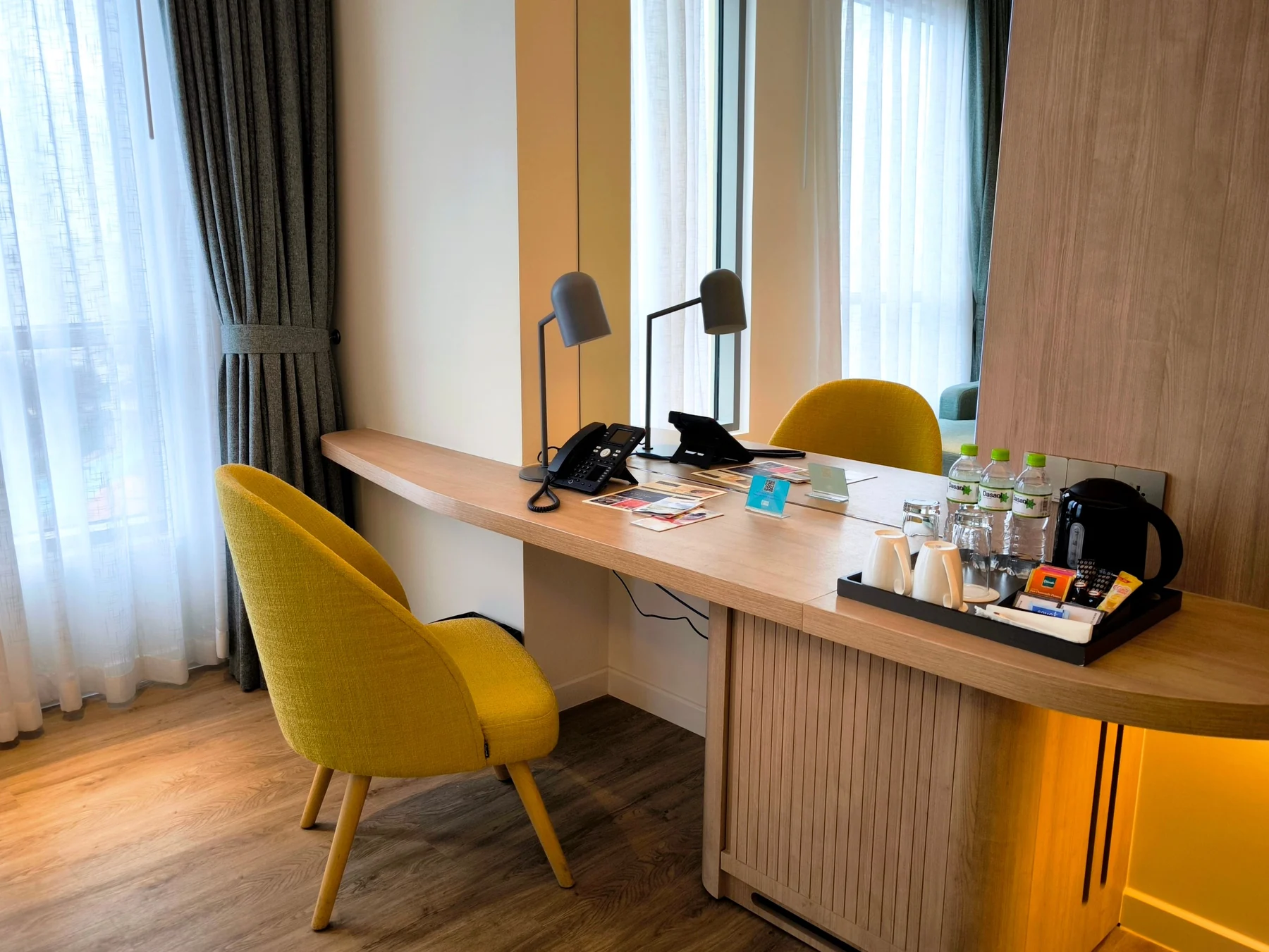
Choose a room configuration that suits the people and routines involved. Check the stated sleeping arrangement and the features of the room category you are actually considering. A photograph from a property gallery may show a different category from the one in your selection. If you need space to work, separate places to sleep or a particular bathroom arrangement, ask about that detail directly. Make the question concrete enough that the answer can be connected to the room you would reserve, rather than to the property in general.
Think about the time you expect to spend indoors. A brief overnight stop may place most weight on a straightforward arrival and departure, while a longer visit may make room layout and a comfortable place to sit more valuable. Families, friends and solo visitors can reach different conclusions from the same information. Give everyone one or two priorities before comparing properties. This helps prevent a long search in which every extra feature looks desirable even though nobody expects to use it during the actual stay.
Compare bases with a small working table
Build a shortlist you can explain. For each option, record the reason it belongs on the list and the question that still needs an answer. Use consistent dates, guest numbers and room categories as far as possible. A short table keeps the decision connected to the trip and makes it easier to remove an option that does not fit. It is also useful when someone else joins the planning: they can see the reasoning instead of receiving a collection of links with no indication of what matters.
| Main purpose | Map first | Ask before deciding |
|---|---|---|
| Old Market time | Your chosen gallery, meal or meeting point | How will you return to the room after the outing? |
| Museum and parks | The museum entrance and the park you want to visit | Where does the day begin, pause and finish? |
| A fixed appointment | The exact building or event entrance | Which journey must remain simple each day? |
| An airport-linked stop | Eppley arrival and the actual property | Is the proposed transfer confirmed for your journey? |
Read the current booking terms alongside the room description. Note what is included, which arrangements are separate and how the selected booking handles changes. Keep the information from the channel through which you intend to book, because a general description and a particular reservation can answer different questions. You do not need a complicated scoring system. A clear note saying that one option solves the arrival while another better supports the evenings is often enough to make the remaining tradeoff visible.
Plan one satisfying city day
Give the first full day a main interest and a smaller optional addition. The Durham Museum is based in Omaha’s Union Station and presents regional history alongside changing exhibitions. It can provide a clear focus for a visitor interested in the city’s past, with the museum’s own visitor information supplying the practical details. Pair an indoor interest with an outdoor interval only if both appeal to the group. There is no need to turn the availability of several nearby possibilities into a requirement to complete them all.
Choose an end point as well as a starting point. You might want to finish near the room, at a meal or at a place where everyone can arrange the return journey comfortably. This simple decision gives the afternoon a shape without setting a rigid timetable. Keep enough space for a longer museum visit, a slower lunch or a change in weather. The museum and riverfront planning guide offers a way to combine interests while retaining that flexibility.
Match the walking plan to the people
Consider the whole outing when deciding whether walking suits your group. The relevant route starts at the property entrance, includes the places you intend to visit and finishes where you need to be next. A neighbourhood described as walkable does not answer every question about surfaces, crossings, steps or fatigue. If a particular access feature matters, ask the property or venue about the exact feature and consult its current information. Keep those answers together so that one convenient segment does not hide a difficult connection elsewhere in the day.
Leave room for people to take part differently. A group can share the main visit while allowing one person a quieter interval or an earlier return. Agree where to meet again and how each person will get there before separating. This can make a short stay more enjoyable than requiring everyone to follow one continuous route. The room then becomes a useful base for the group, rather than just a place everyone leaves in the morning and cannot return to until the planned activities are over.
Give luggage a place in the sequence
Arrival and departure days often contain a gap between travelling and using the room. Think through that interval before adding sightseeing. Ask the actual property about any luggage arrangement you intend to rely on, including how collection would fit the next journey. If you have not confirmed such an arrangement, build a plan that works without it. A museum visit or district wander is a different proposition with everyone carrying bags. The best use of a spare afternoon may depend more on this detail than on the length of an attractions list.
For departure, place the final essential tasks in order: collect belongings, complete the property’s departure process, reach the agreed vehicle or route and continue to your next destination. Keep optional stops on the other side of that sequence. If the final morning includes several people leaving separately, note who has which bags and which confirmation details. A little coordination avoids relying on the person who leaves first to hold information everyone else still needs. The Eppley arrival guide also helps identify the transport questions to revisit for the return.
Make a travel note you can actually use
Keep a short practical note rather than trying to carry the entire research process with you. Include the property’s exact name and address, the arrival arrangement, one fixed commitment and links to the official resources you may need. Keep booking references and sensitive details in an appropriate private record. The useful note is the one you can scan while moving or share with a companion without explanation. Give it a clear date so an older message does not become the accidental source for a changed arrangement.
- The base
- Exact property and room category.
- Arrival, departure and any essential access detail confirmed with the property.
- The journeys
- The current arrival source and agreed transport.
- The exact destination for the most important daily trip.
- The city time
- One main interest and one optional addition.
- A sensible return point and an indoor alternative.
Use the note to test the choice one last time. Imagine arriving with the bags and following the first few steps. Then imagine the end of the busiest day and the start of departure morning. If a step depends on an unanswered question, resolve that question with the responsible property or operator. If the answer changes your choice, return to the shortlist with a specific reason. This is more useful than restarting the whole search simply because another attractive photograph has appeared.
Keep the stay centred on your reasons for visiting
The Visit Omaha accommodation directory is a useful place to begin researching location and property type. Move from that broad view to the actual property and selected room before making a commitment. The directory can introduce possibilities; your own dates, companions and daily journeys determine whether they fit. Save the few details that informed the decision so that you can distinguish a meaningful change from a minor difference when you review the trip closer to departure.
A good plan leaves some of Omaha unplanned. Once the essential journeys and room arrangements make sense, you can let a meal run longer, spend more time with an exhibition or simply return for a break. The aim is a base that supports those choices without constant reorganisation. Choose for the visit you want to have, explain the practical details clearly and leave enough space to enjoy the city between them. That is a more useful outcome than finding a property that appears to satisfy every possible travel preference.
Still comparing Sightseeing?
Ask for tour ideas, hotel suggestions, or a simple trip plan that combines both.